TJF Showcases Sustainable Peatland Management as a Nature-Based Solution at AsiaFlux Conference 2025
November 21, 2025 16:52
TJF Showcases Sustainable Peatland Management as a Nature-Based Solution at AsiaFlux Conference 2025
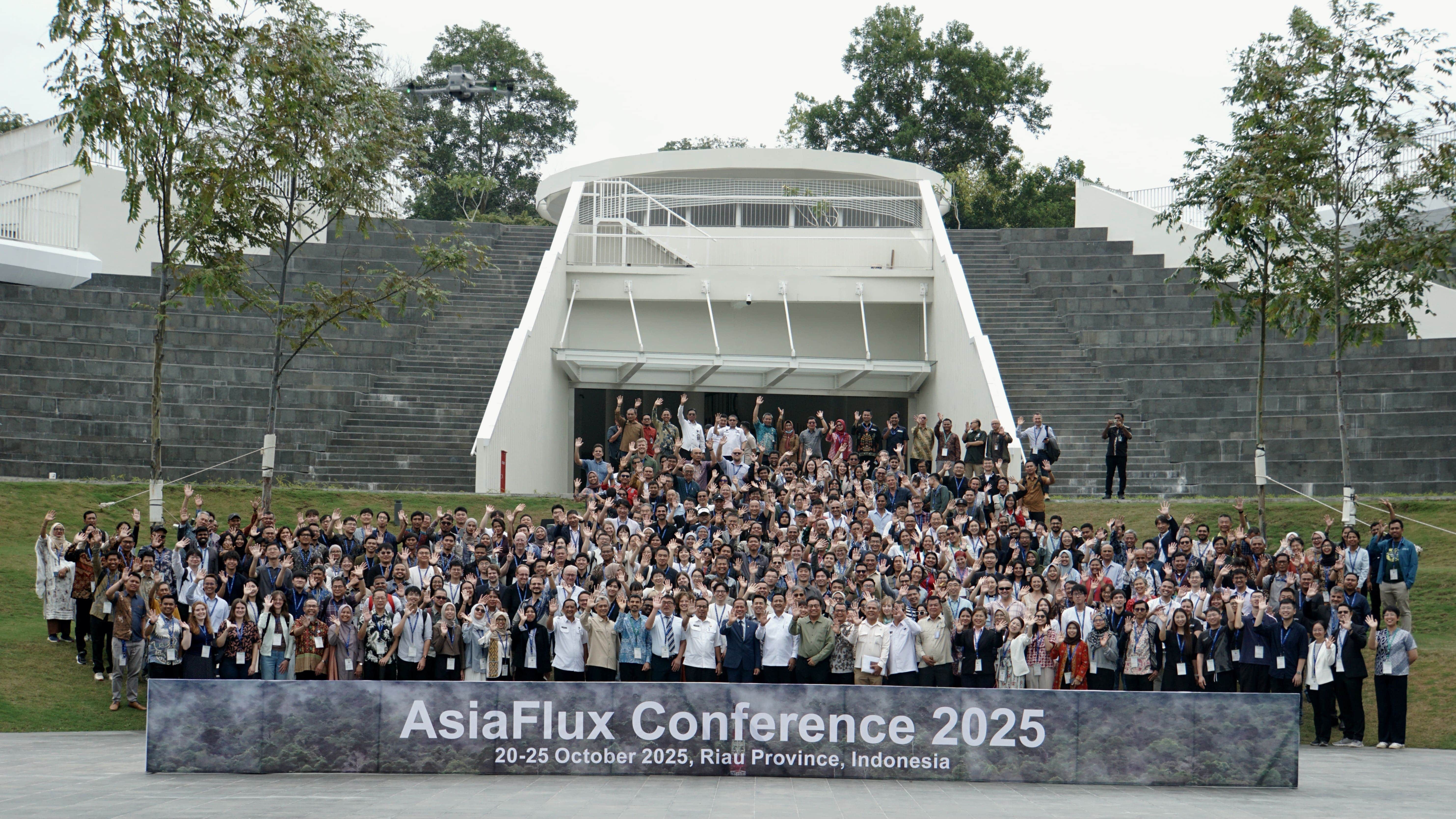
Pangkalan Kerinci, Riau – From 20th to 25th October 2025, Tay Juhana Foundation (TJF) sent two representatives, Safira Eka Aprianti (Agroforestry Researcher) and Nurul Ihsan Fawzi (Operational Manager), to the annual AsiaFlux Conference. The Conference is the region's flagship forum for scientists, policymakers, and practitioners working on ecosystem-atmosphere exchanges and land-based climate solutions. The conference continues to play an important role in strengthening regional and global collaboration while inspiring the next generation of scientists.
This year’s gathering in Pangkalan Kerinci marked a milestone as the first AsiaFlux Conference hosted in Indonesia, following its previous editions in South Korea (2023) and China (2024). The week-long event featured a series of key activities, namely a flux measurement training course, scientific conference sessions, a young scientists meeting, and a field excursion.
With the theme “Nature-Based Solutions for Asia: From Advanced Science and Technology to Practices,” the 2025 conference emphasized the urgent need to translate scientific findings into scalable, inclusive, and verifiable climate solutions. The discussions highlighted the role of effective Nature-Based Solutions (NbS) in driving climate mitigation and adaptation across Asia’s diverse landscapes.
Flux Measurement Training
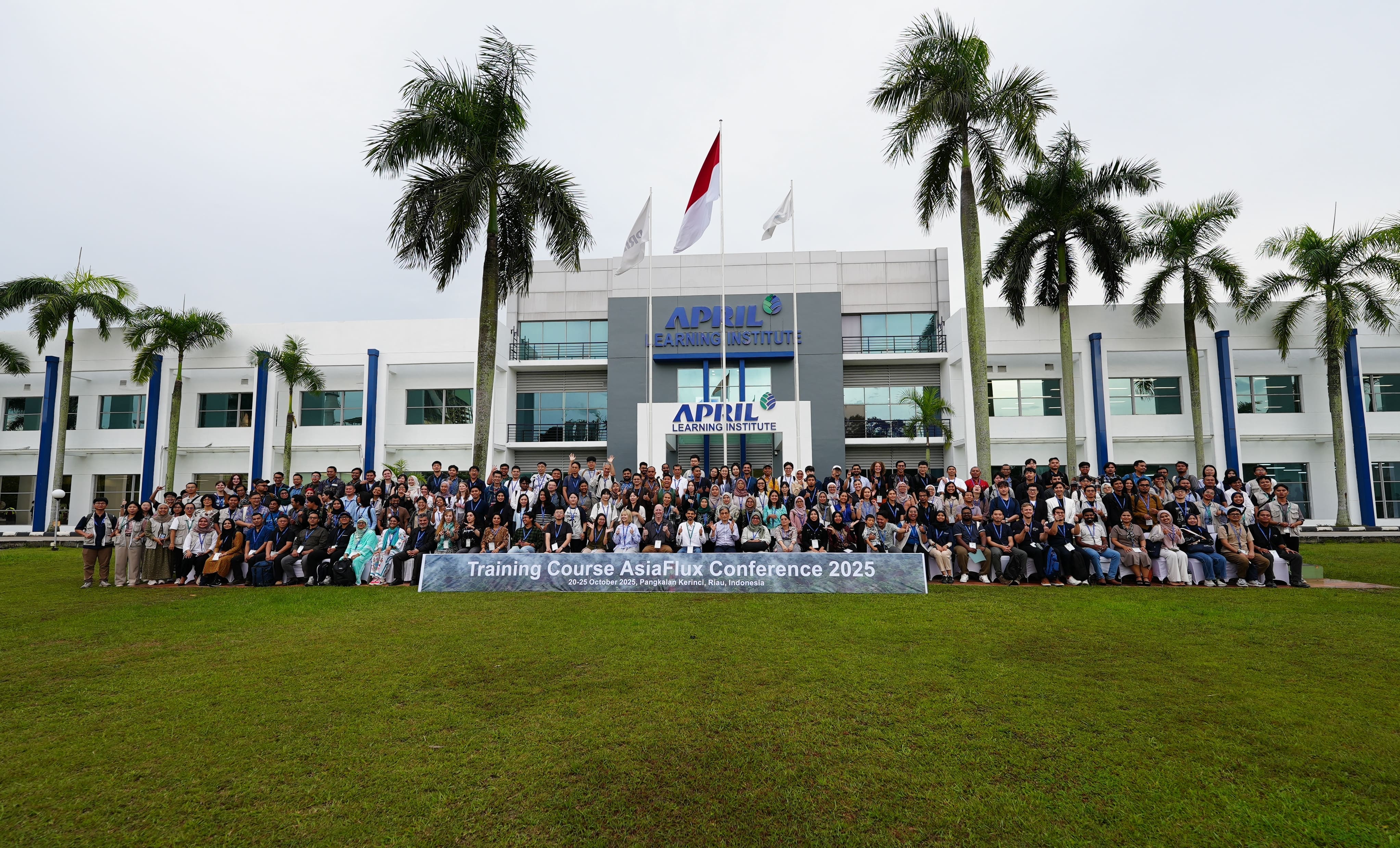
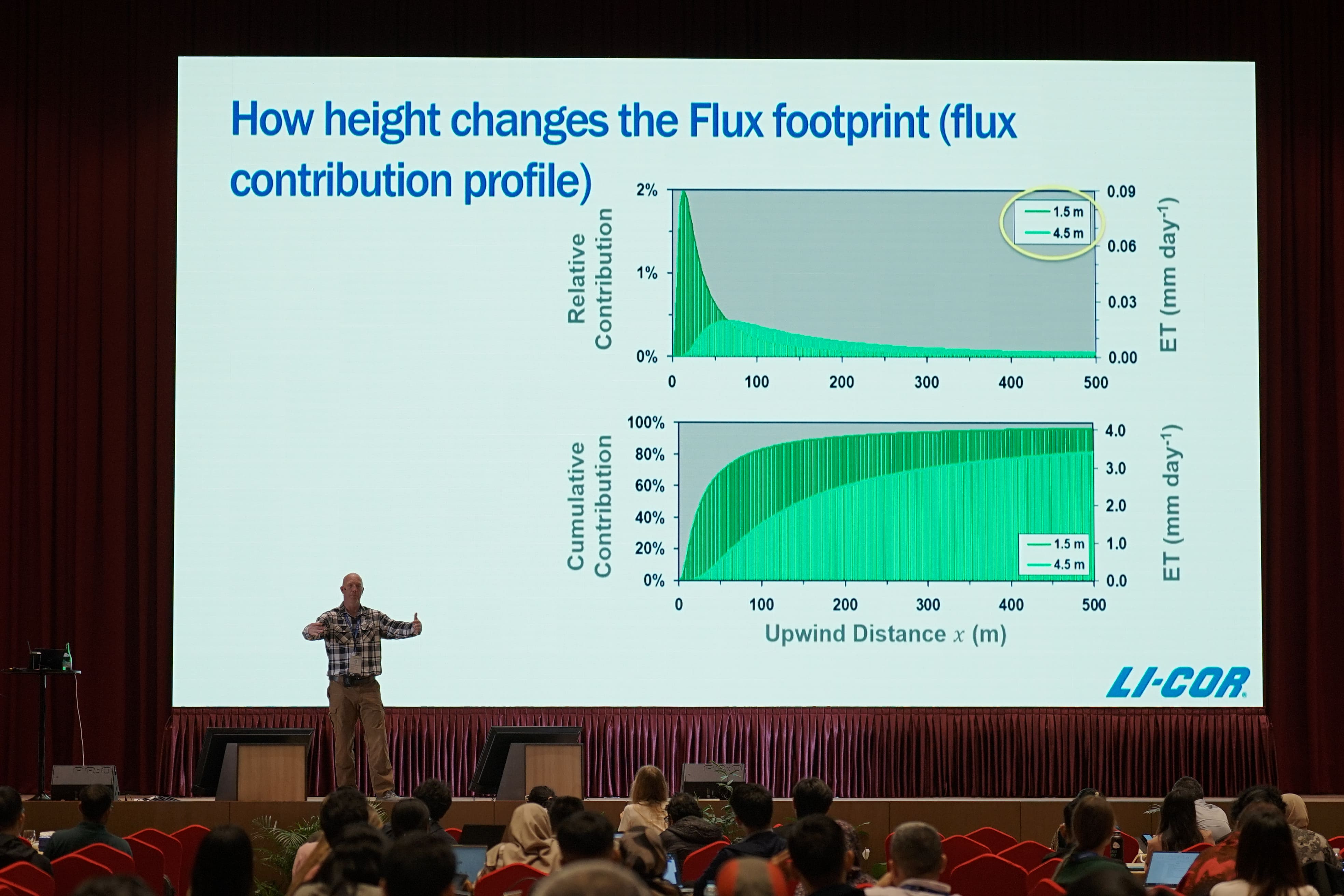
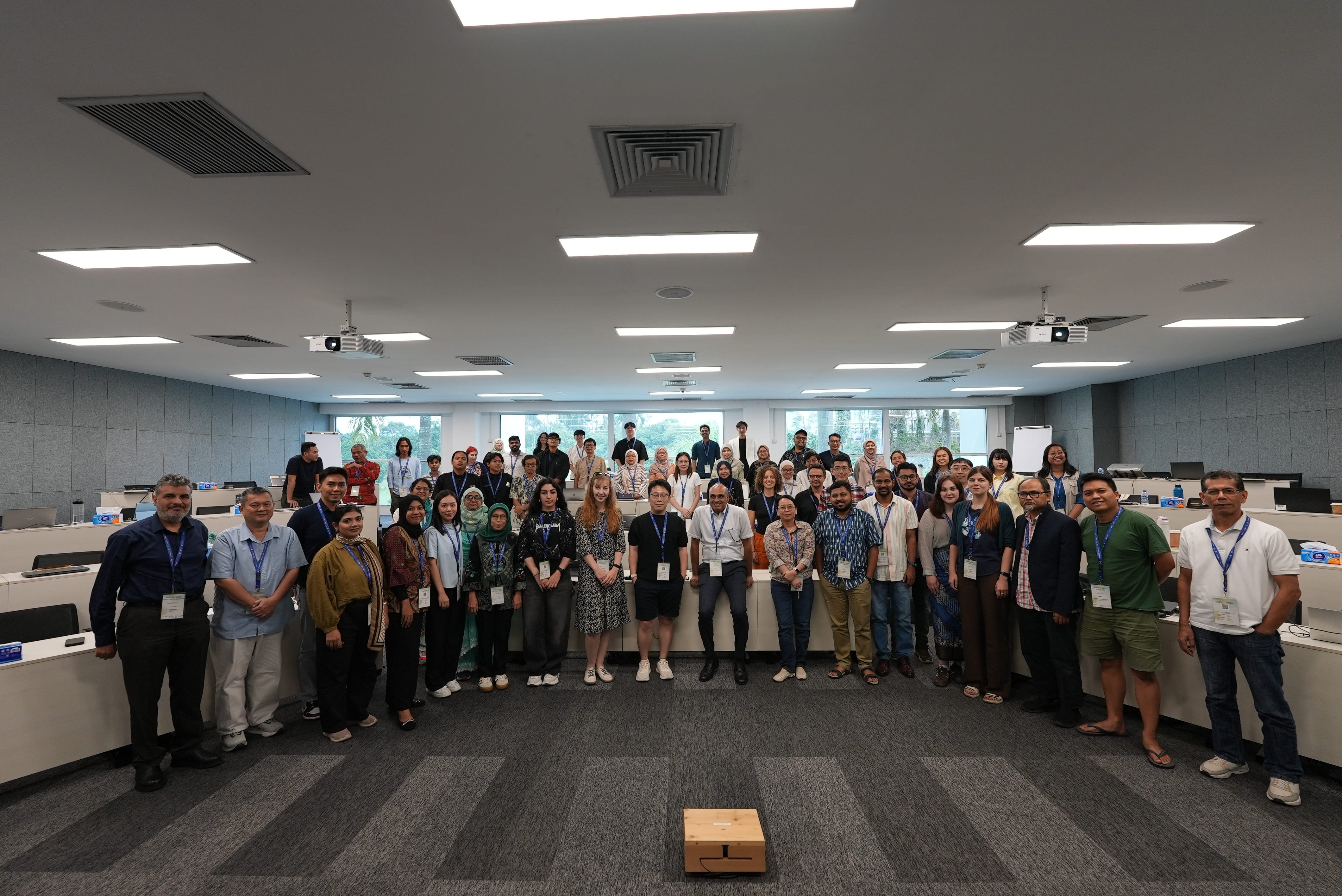
During the Flux Measurement Training, participants were introduced to the Eddy Covariance technique, one of the most advanced approaches for monitoring ecosystem fluxes. The course guided participants through the fundamentals, from basic theory and instrument operation to data processing and analysis.
A key focus was the importance of measuring trace gas fluxes to understand the mechanisms behind ecosystem dynamics. Participants also explored methods for measuring soil trace gases, including instrumentation setup, installation, and flux computation.
The training was carried through live demonstration and hands-on experience with instrument installation alongside the introduction of the latest carbon dioxide isotope analyzer, representing the forefront of technology in flux measurement.
TJF’s Poster Presentation
TJF had the opportunity to share its work through a poster titled “Enhancing Peatland Soil Health through Coconut-Based Agroforestry in Indragiri Hilir, Riau, Indonesia.” The study evaluated and compared peat soil health between coconut monoculture and coconut-based agroforestry systems in Pulau Burung, Indragiri Hilir highlighting agroforestry as a promising NbS for improving soil conditions (through better nutrient cycling) and supporting sustainable peatland management.
Using the Soil Quality Index (SQI) approach to measure soil health, which integrates physical, chemical, and biological soil properties, the research found that agroforestry systems scored higher (57.68%) than monoculture ones (46.04%). These results indicate stronger soil health and more resilient ecosystem performance under agroforestry practices.
The poster successfully drew strong interest from participants, many of whom were intrigued by coconut cultivation on peat soils and the potential of agroforestry to enhance soil functions and ecosystem resilience. The discussions opened doors for collaboration and knowledge exchange on innovative approaches to sustainable peatland management.

Young Scientist Meeting
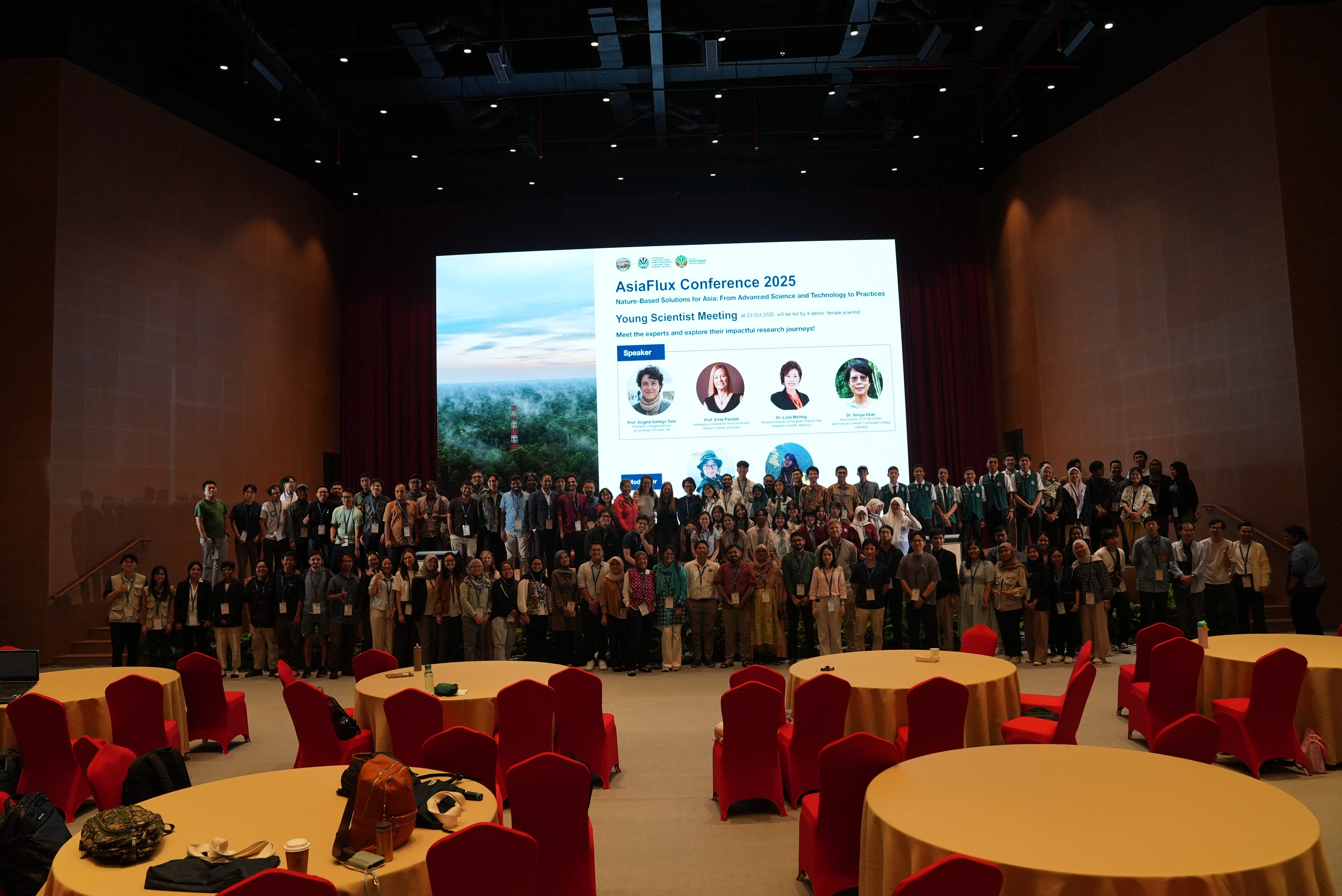
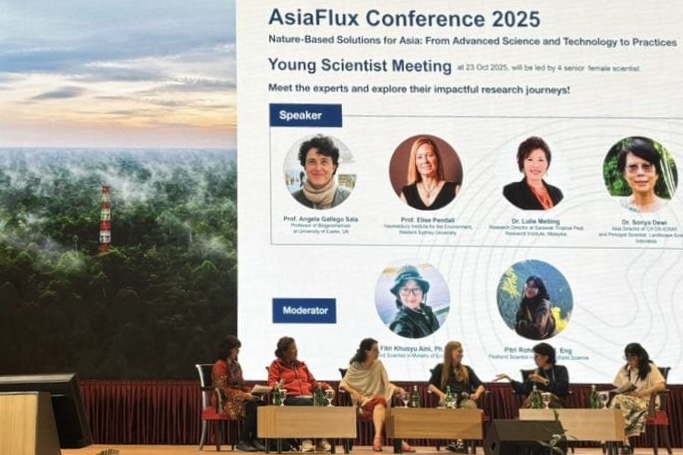
The Young Scientists Meeting aimed to bring young minds together and spark a more collaborative scientific future. Designed as an open and energizing space, the session encouraged early-career researchers to exchange ideas, build networks, and learn directly from leading women scientists in flux research: Prof. Angela Gallego Sala (University of Exeter, UK), Prof. Elise Pendall (Western Sydney University, Australia), Dr. Lulie Melling (Sarawak Tropical Peat Research Institute, Malaysia), and Dr. Sonya Dewi (CIFOR-ICRAF, Indonesia).
Through this session, participants gained valuable insights into each speaker’s research journey and the real-world impact of their work, while also discovering potential pathways for collaboration. Beyond the discussions, the meeting became a meaningful space to share research experiences, explore scholarship opportunities, and connect with peers from diverse backgrounds. This inclusive environment fostered a sense of community—supporting young scientists as they grow, collaborate, and contribute to advancing global ecosystem science.
Field Excursion
TJF’s representative also joined the field excursion to a Eucalyptus plantation in Kampar Regency, a site covered with 70% Eucalyptus plantation and 30% riparian forest consisting of more than 46 tree genera. The riparian forest sits on low-lying land along the river bank, and serves as home to a rich biodiversity, including key wildlife such as elephants.
During the excursion, the participating group got to observe several researches conducted, including Eddy Covariance flux tower measurements, sap velocity monitoring, soil carbon dioxide and stem methane flux assessment, and a guided riparian forest observation. The carbon, water, and energy flux data generated from this site play a key role in understanding the complex ecosystem dynamics within this mixed forest environment.
By taking part in this activity, TJF also gained the opportunity to explore new research approaches relevant for the development of future projects, while also expanding our network among researchers working on forest, peatland, and climate-related studies.
Strengthening Our Path Forward
As the conference concluded, TJF’s participation reinforced our commitment to advancing science-based solutions for sustainable peatland management. The knowledge exchanged, connections built, and collaborations explored throughout the week not only broadened our perspective but also underscored the crucial role of Nature-based Solutions in addressing climate and landscape challenges across Asia. These insights will continue to guide our work as we contribute to a more resilient, climate-smart future for Indonesia and the region.
Follow our journey as we continue developing and promoting evident-based solutions, and explore more of TJF’s research and insights on peatland ecosystems, sustainable agriculture, and climate resilience through our Instagram and LinkedIn.


RELATED
ARTICLE
Landmark Pluit Building-2nd Floor, Tower D6, RW.4, Pluit, Kecamatan Penjaringan, Jakarta Utara, Daerah Khusus Ibukota Jakarta 14440
Phone: (021) 6603926
WhatsApp: +62 815 8855 584
Follow our social media:
![[object Object]](/icons/instagram.svg)
![[object Object]](/icons/facebook.svg)
![[object Object]](/icons/youtube.svg)
![[object Object]](/icons/linkedin.svg)
Privacy Policy
Copyrights © 2026 Tay Juhana Foundation