Exploring New Paths to Food Security on Suboptimal Lands Amid El Niño
November 18, 2026 14:45
Exploring New Paths to Food Security on Suboptimal Lands Amid El Niño
The growing threat of El Niño-induced drought poses increasing risks to agriculture in Indonesia, where the nation’s Meteorology, Climatology, and Geophysical Agency has predicted below-normal rainfall across more than 80% of the country, especially for farmers on suboptimal lands — lands that can be used for agricultural purposes, provided that their management is adapted to specific constraints, such as low soil fertility, water scarcity, or waterlogging, where Indonesia is known to have the largest areas in the Southeast Asia region.
Through our latest engagement, Tay Juhana Foundation (TJF) Dialogue, together with the Centre for Transdisciplinary and Sustainability Sciences (CTSS) at IPB University (17/11), highlighted how land management tailored to local conditions can help sustain agricultural productivity and strengthen local food security on the theme “Rethinking Food Systems and Suboptimal Land Agriculture Amid Climate Change and El Niño”, together with Agri Sustineri Indonesia Foundation (YASI), PISAgro, and Perhimpunan Filantropi Indonesia.
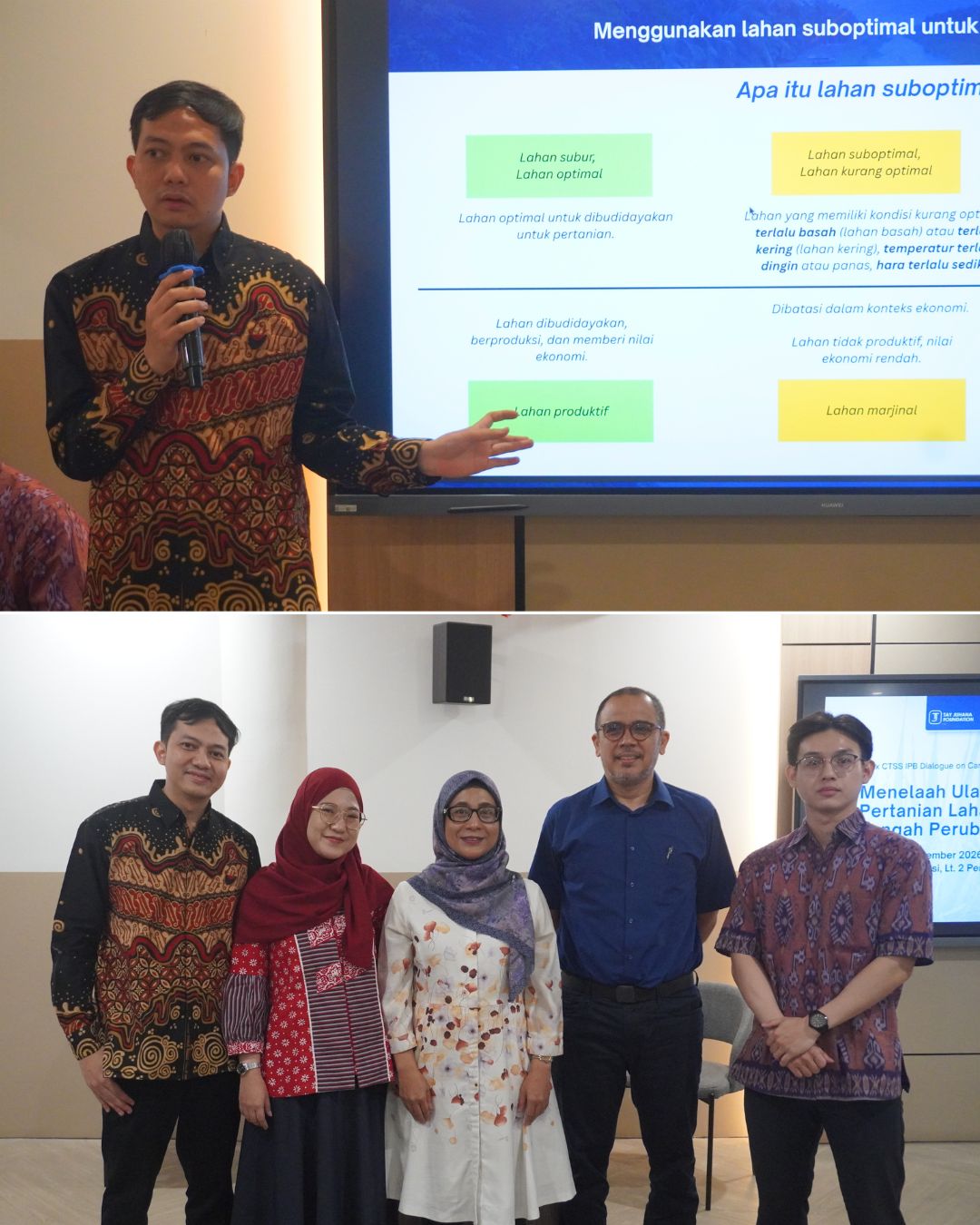
One key theme highlighted is the importance of connecting research and innovation with land management practices that have evolved within local communities. This way, local knowledge can serve as an important foundation for developing agricultural approaches that are more responsive to climate change, as highlighted by Dr. Nurul Ihsan Fawzi, S.Si., M.Sc., Researcher and Manager at Tay Juhana Foundation. Take the example of integrated water management, known as the water management trinity, which consists of three key components: canals, embankments, and water gates. Together, these help prevent flooding during the rainy season and excessive drying during the dry season, reducing the risk of land becoming a fire hotspot.
Dr. rer. nat. Rina Mardiana, S.P., M.Si., Fellow at CTSS and lecturer at IPB University, also shared a similar note, where she emphasized the transdisciplinary approaches in strengthening food security on suboptimal lands. This approach, simply put, combines academic expertise with local knowledge to solve complex problems. Who has it? The farmers in the field with their ancestral knowledge! As she explained, this approach recognises farmers and field practitioners not merely as recipients of technology or targets of agricultural extension, but as equal partners and co-creators alongside academics in developing context-specific solutions and policies; therefore, finding innovation on suboptimal lands is not an issue since their productivity can be optimised through management practices that take into account their ecological characteristics and local food potential.
Furthermore, the dialogue also examined how stronger food value chains can help sustain smallholder farming businesses amid climate-related pressures. This is what Teddy H. Tambu, Chair of the YASI, noted: smallholder farmers receive only around 15–22% of the value generated along the horticultural distribution chain. Meanwhile, post-harvest losses can reach 40–60%; therefore, innovations such as “Pancer Tani” that the organization have implemented act to buffer agricultural shocks at the village level through six types of business activities that seek to expand market access, including through government programmes, while strengthening value chains through product diversification. These efforts aim to improve the competitiveness of farmers' selling prices.
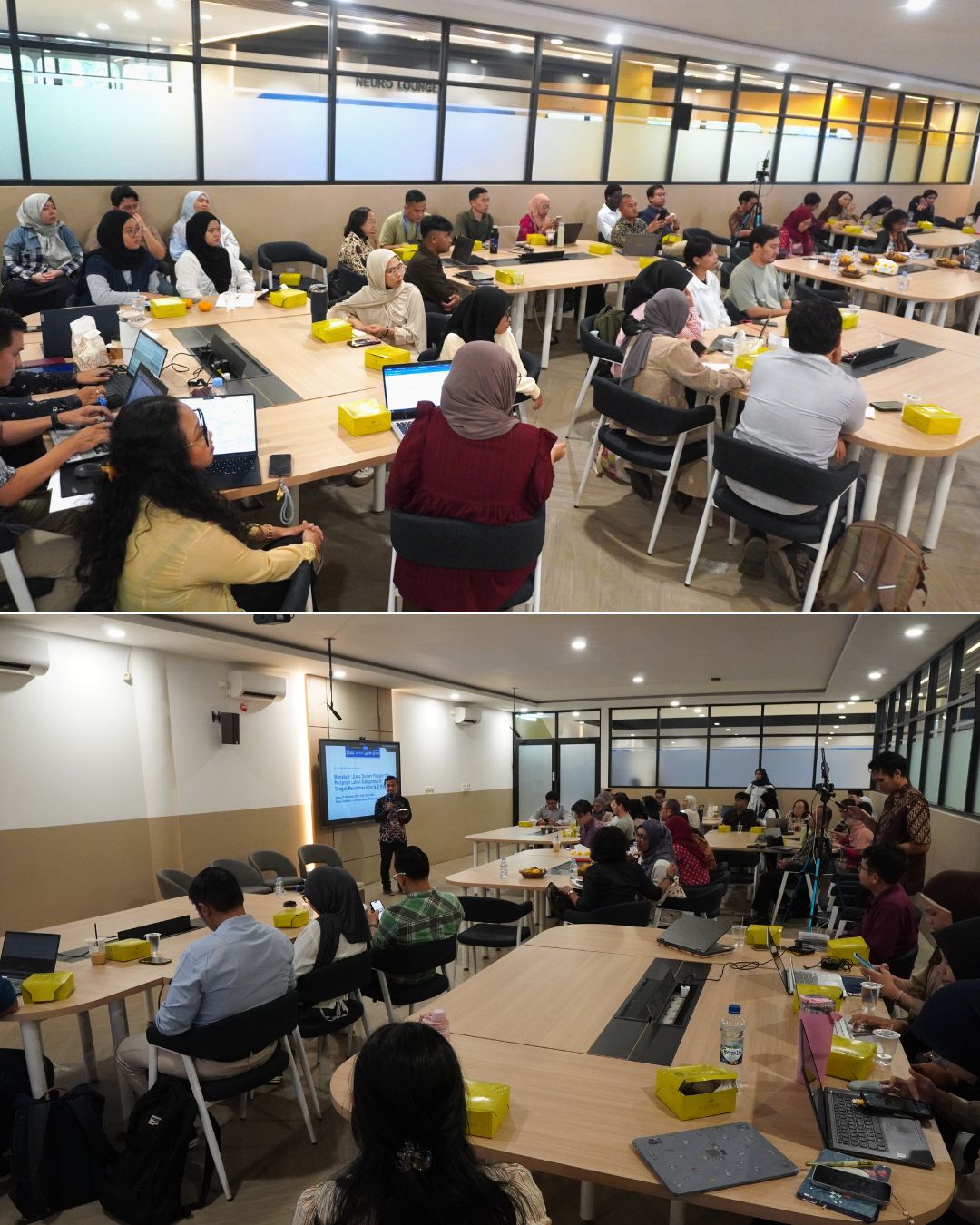
These key takeaways showcase how we at Tay Juhana Foundation continue to move the needle through holistic approach in strengthening food systems and responding to ecological conditions that support the sustainability of smallholder farming as well as continue creating opportunities for cross-sector collaboration to promote responsible management and agricultural practices on suboptimal lands, while contributing to stronger food security in Indonesia.
Follow us on Instagram and LinkedIn for more updates on our work and activities.
Category
Other
Topic
Agriculture
Farmer Empowerment
Food Security
Governance
Suboptimal Land
Livelihood
Management Strategy
Climate Resilience
Share This Article


RELATED
ARTICLE
Landmark Pluit Building-2nd Floor, Tower D6, RW.4, Pluit, Kecamatan Penjaringan, Jakarta Utara, Daerah Khusus Ibukota Jakarta 14440
Phone: (021) 6603926
WhatsApp: +62 815 8855 584
Follow our social media:


Privacy Policy
Copyrights © 2026 Tay Juhana Foundation