Pushing Food Security Through Sustainable Suboptimal Land Cultivation in Kuala Enok
September 16, 2026 16:54
Pushing Food Security Through Sustainable Suboptimal Land Cultivation in Kuala Enok
In our latest story, we take you to Kuala Enok, Indragiri Hilir Regency, Riau Province, where our team explored how rice is cultivated on suboptimal land, specifically acid sulfate soil in dry conditions, which might be one of the keys to pushing innovative farming to reach food security as part of Tay Juhana Foundation’s Food Security and Sustainability Center (FOSTER).
Over generations, coconut farming has been the backbone of the community in the Regency, driven by the region’s vast coastal peatlands and tidal lowlands, where the plant thrives. However, climate change and land degradation have affected coconut yields and prices, creating economic vulnerabilities for communities whose livelihoods are closely tied to this commodity; therefore, an alternative is necessary.
The community and team found that the land in the region is highly acidic and, when exposed to oxygen, becomes even more acidic, leaving both waterlogged and non-waterlogged areas nutrient-poor. At the same time, despite being a tidal swampland, the soil is relatively dry. This raised a specific question: Can rice be grown in Kuala Enok under these conditions? If so, which rice varieties and soil treatments would support its growth?
As an initial step, the team went to Tanah Merah Village as part of the research pilot site, where they prepared the land by clearing weeds and other plants using both chemical and manual methods, then ploughed, applied different amounts of dolomite to each plot at least 14 days before the rice was planted. In this trial, we installed sprinkler irrigation to provide controlled water supply under the experimental conditions.
On this occasion, the study tested three rice varieties: Inpago 13 Fortiz, Ciherang, and Inpari 39 Tadah Hujan, and planted them in late February this year using the Tabela (tanam benih langsung–direct seeding) method with the traditional Tugal technique, in which rice seeds are sown directly into the field by hand and stick. This was the first time the method was applied on site, requiring the field team to adapt to a new planting approach. These varieties were selected based on characteristics indicating their potential to grow under dry conditions. Each variety was tested with four dolomite doses. Each variety-dolomite combination was replicated three times, for a total of 36 experimental subplots.
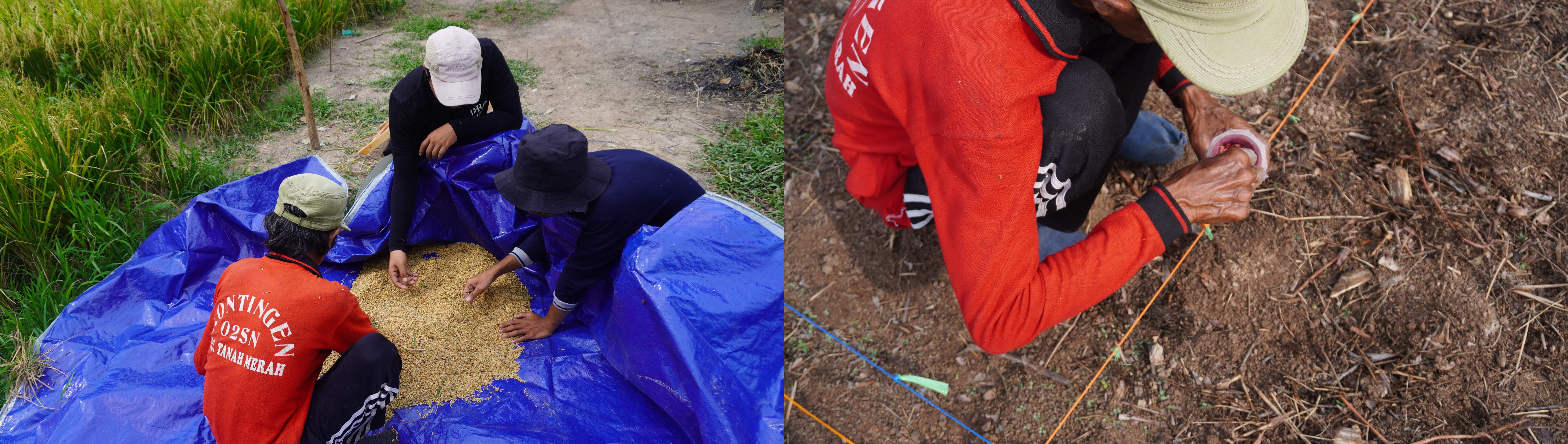
Three Varieties and Four Dolomite Treatments Later
After 111 days of cultivation, the harvest yielded approximately 2.8–4.13 tonnes per hectare across all plots, with no statistically significant differences among them. On average, Inpari 39 with the highest dolomite application achieved the highest potential and actual productivity, while Inpago 13 grew taller, and both Ciherang and Inpari 39 produced more shoots and grains. Due to uneven maturity rates and unexpected field challenges beyond soil conditions, harvesting could not be completed all at once; however, these initial findings offer valuable insights into how different varieties and soil treatments respond under pilot conditions.
Lastly, this pilot project provided an initial snapshot of how different rice varieties and dolomite treatments responded under dry acid sulfate soil conditions in Kuala Enok, and highlighted what needs better preparation for future research—from experimental design and field management to challenges such as local birds feeding on rice grains in some plots, which we tried to address by covering the plots with nets.
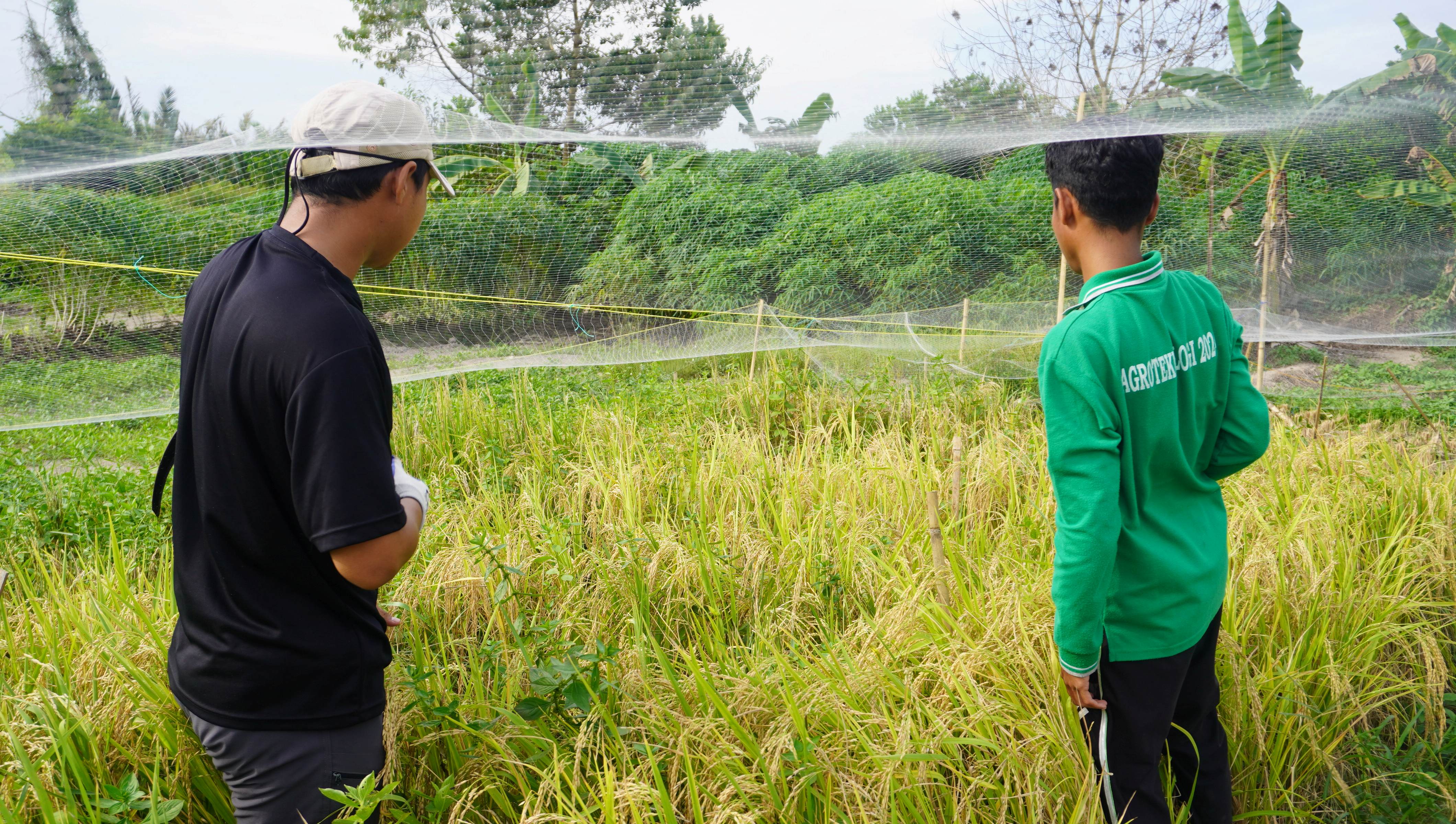
At Tay Juhana Foundation, we are committed to advancing food security on suboptimal lands through sustainable agriculture. Follow more updates on our integrated agriculture system projects through our Instagram and LinkedIn, and learn more about it through our TJF Research Brief.
Category
Other
Topic
Agriculture
Food Security
Suboptimal Land
Landscape
Livelihood
Suboptimal Land
TJF Update
Share This Article


RELATED
ARTICLE
Landmark Pluit Building-2nd Floor, Tower D6, RW.4, Pluit, Kecamatan Penjaringan, Jakarta Utara, Daerah Khusus Ibukota Jakarta 14440
Phone: (021) 6603926
WhatsApp: +62 815 8855 584
Follow our social media:
![[object Object]](/icons/instagram.svg)
![[object Object]](/icons/facebook.svg)
![[object Object]](/icons/youtube.svg)
![[object Object]](/icons/linkedin.svg)
Privacy Policy
Copyrights © 2026 Tay Juhana Foundation